Research
Atomistic models are only useful if you can trust them under the conditions a material actually sees: cold vacuum, humid air, molten salt at 1000 K, a charged electrode. My work builds those models and tests them against experiment.
Machine-learning potentials
Quantum calculations are too expensive for large systems. Many classical force fields cannot describe bonds forming and breaking. Machine-learning interatomic potentials learn from DFT and run at MD speed. This thread builds, fine-tunes, and stress-tests them for doped 2D materials and molten salts.
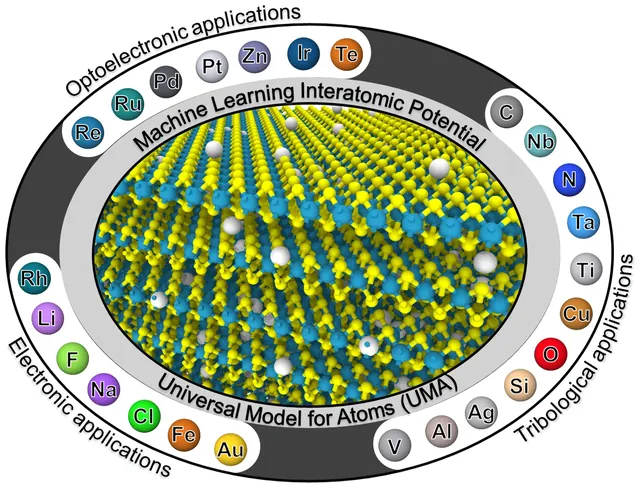
One ML potential, 25 dopants: where it works and where it fails
Meta's universal UMA model reproduced DFT dopant formation energies with a mean absolute error of 0.374 eV across 25 dopants. Heating simulations then showed copper clustering, sodium moving through the layers, and N₂ forming inside the lattice.
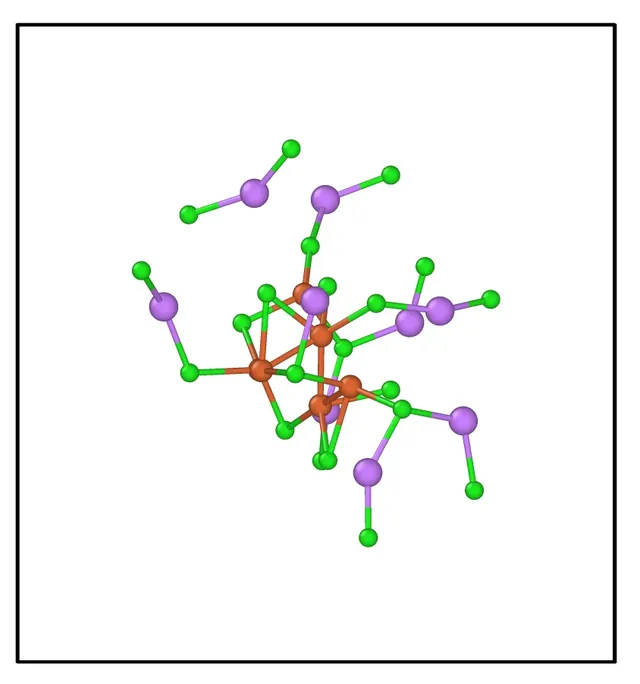
Fixing a foundation model's iron clustering in molten salt
A foundation model put iron ions into persistent clusters in molten LiCl–FeCl₂. Fine-tuning removed the artifact, and the corrected liquid structure was compared with X-ray diffraction.
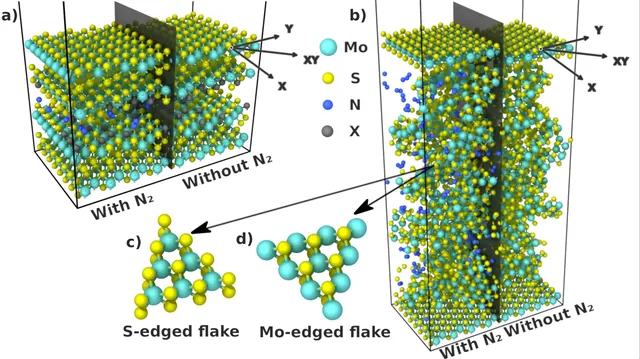
Fine-tuning cuts a foundation model's error eightfold for MoS₂ + N₂
Fine-tuning a foundation potential to see what nitrogen does to MoS₂ coatings during sliding.
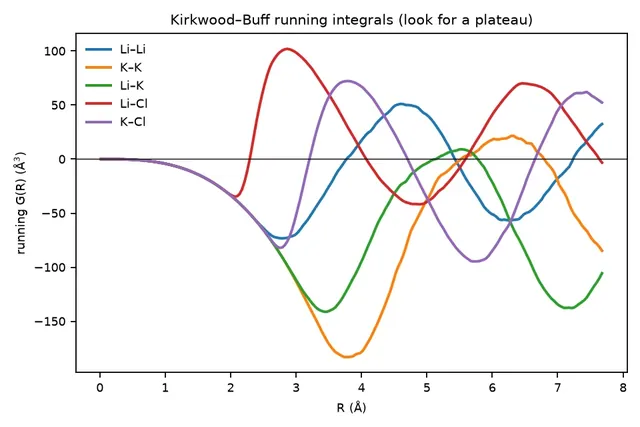
From molten-salt structure to the LiCl–KCl phase diagram
Turning molten-salt structure into thermodynamics and a phase diagram with Kirkwood–Buff theory.
MoS₂ lubricants for space
Space mechanisms use dry MoS₂ films where temperature or vacuum limits liquid lubrication. These films wear out faster in the cold and are sensitive to water and oxygen. This thread combines tribometer tests with reactive MD to test proposed mechanisms and to guide dopant choices.
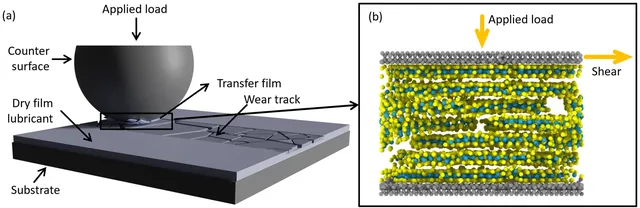
Why MoS₂ space lubricants wear out in the cold
Measurements showed shorter lubricant life below room temperature. Simulations linked smaller MoS₂ flakes to greater water susceptibility and poorer sliding alignment.
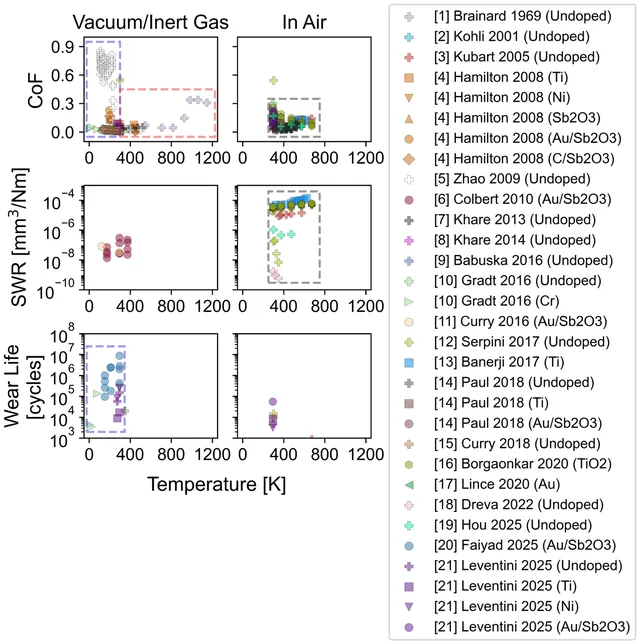
MoS₂ lubricant performance across temperatures
The review assembled temperature-dependent friction, wear, and wear-life results for MoS₂ coatings. In inert gas or vacuum, performance consistently deteriorated below 220 K and changed relatively little between 220 and 540 K.
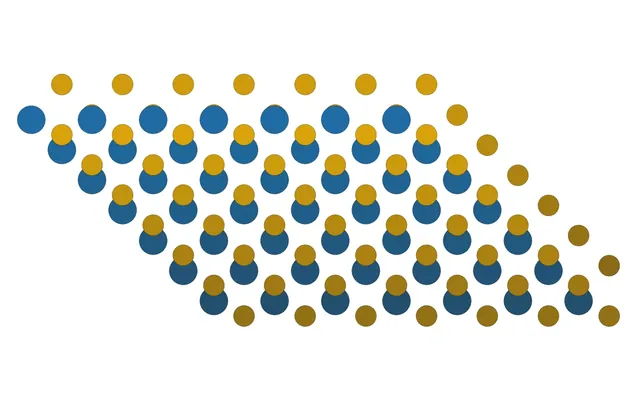
Intermediate nickel lowers shear stress in sputtered MoS₂
Nickel changed the structure and sliding response of simulated sputtered MoS₂ films. Intermediate nickel contents formed a particle associated with lower shear stress.
Electrochemical interfaces
Models of batteries and catalysts depend on how ions interact with the electrode surface. Simulations of that boundary are only as good as the ion–surface interactions they assume. This thread derives those interactions from free-energy profiles and ML potentials.
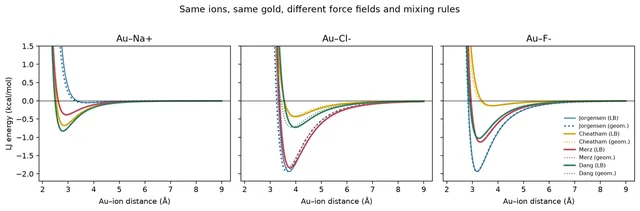
Why classical models get ion adsorption on gold wrong
Common interaction parameters can give qualitatively different predictions for ions near a gold electrode. The study tuned those parameters against a machine-learning model and examined their effect on the electrical interface.
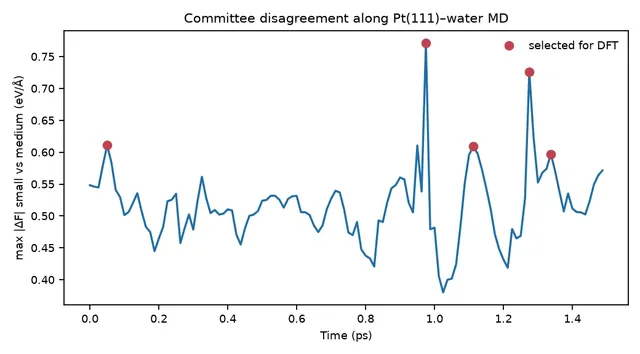
Uncertainty-driven training data for interface potentials
Letting a model’s own uncertainty decide which interface structures get expensive DFT labels.
Nanoscale mechanics
Where it started: molecular dynamics of how cooling rate, defects, and composition control the strength of printed superalloys, nanowires, and solders. Several of these papers came from undergraduates mentored through a student research network.
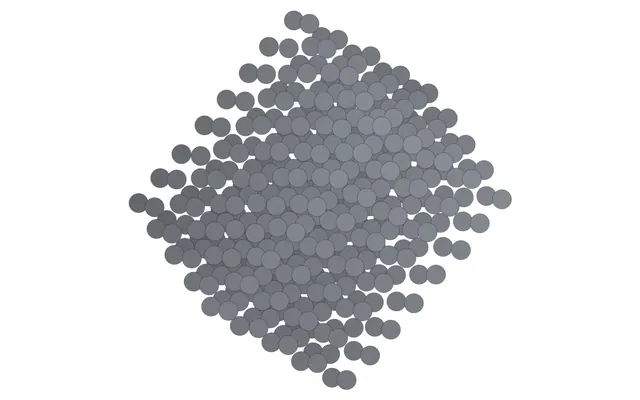
Faster cooling makes lead-free solder weaker but tougher
Faster cooling reduced strength and stiffness in simulated tin-based solders. SAC305 retained the highest tensile strength among the materials compared.
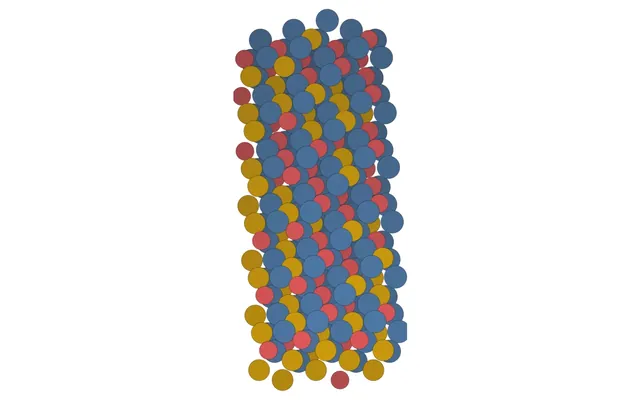
Selenium makes CdTe nanowires stronger and stiffer
Selenium increased the stiffness and tensile strength of simulated cadmium telluride nanowires. Crystal orientation also affected zinc-blende wires.
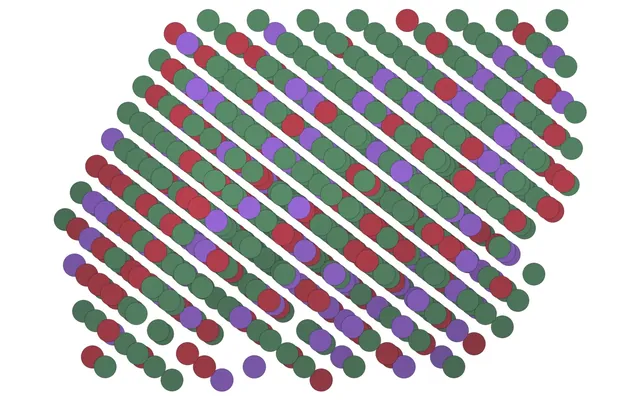
Cooling rate and strength in 3D-printed Inconel
In simulations of printed Inconel-718, faster cooling produced lower density, more defects, and a lower Young’s modulus.
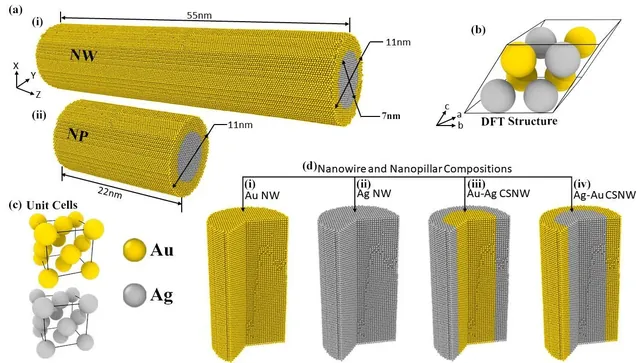
Gold–silver core–shell nanowires under repeated stretching
The placement of gold and silver changed how simulated nanowires responded to repeated loading. The silver-core, gold-shell wire showed the greatest structural reversibility among the wires studied.
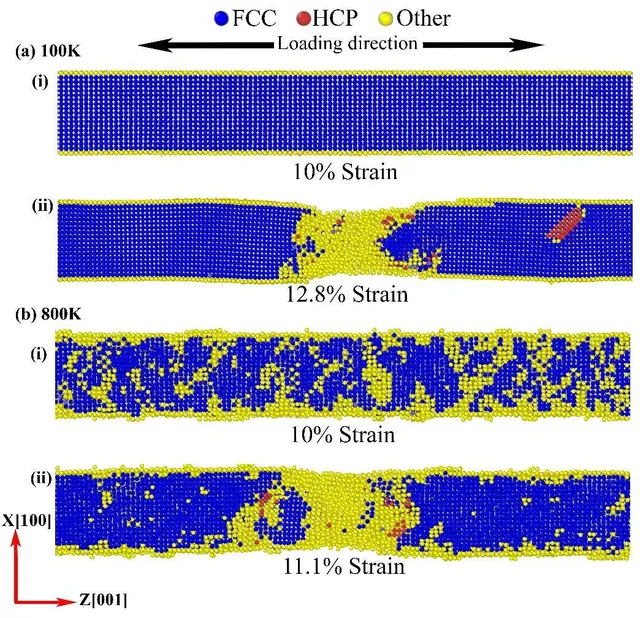
How temperature and cooling rate affect Inconel nanostructures
Inconel-718 nanostructures weakened as temperature rose. Rapid cooling increased simulated strength and fracture strain and could eliminate a central void during solidification.