The problem
Stretchable electronics need conductors that withstand repeated deformation. The effect of gold and silver placement on nanowire fatigue was unclear.
What I did
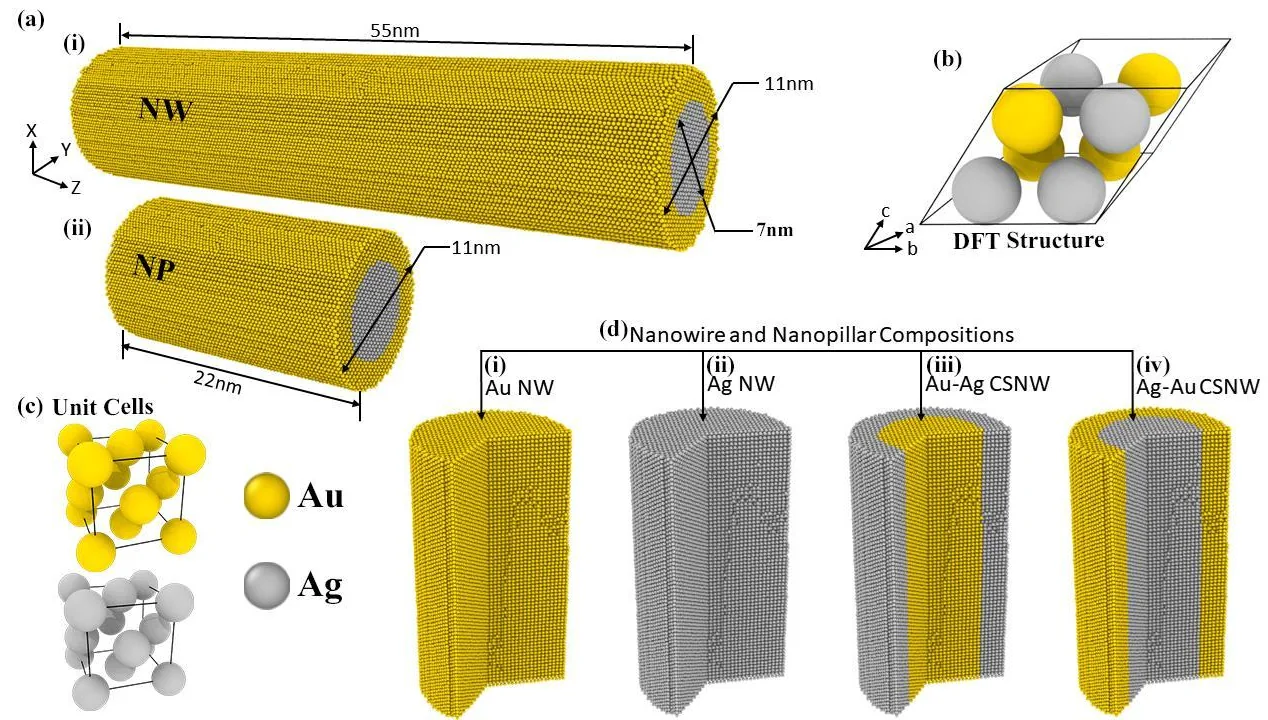
The authors parameterized a modified embedded atom method potential using density functional theory calculations. Molecular dynamics compared pure and core–shell nanowires under tension and cyclic loading.
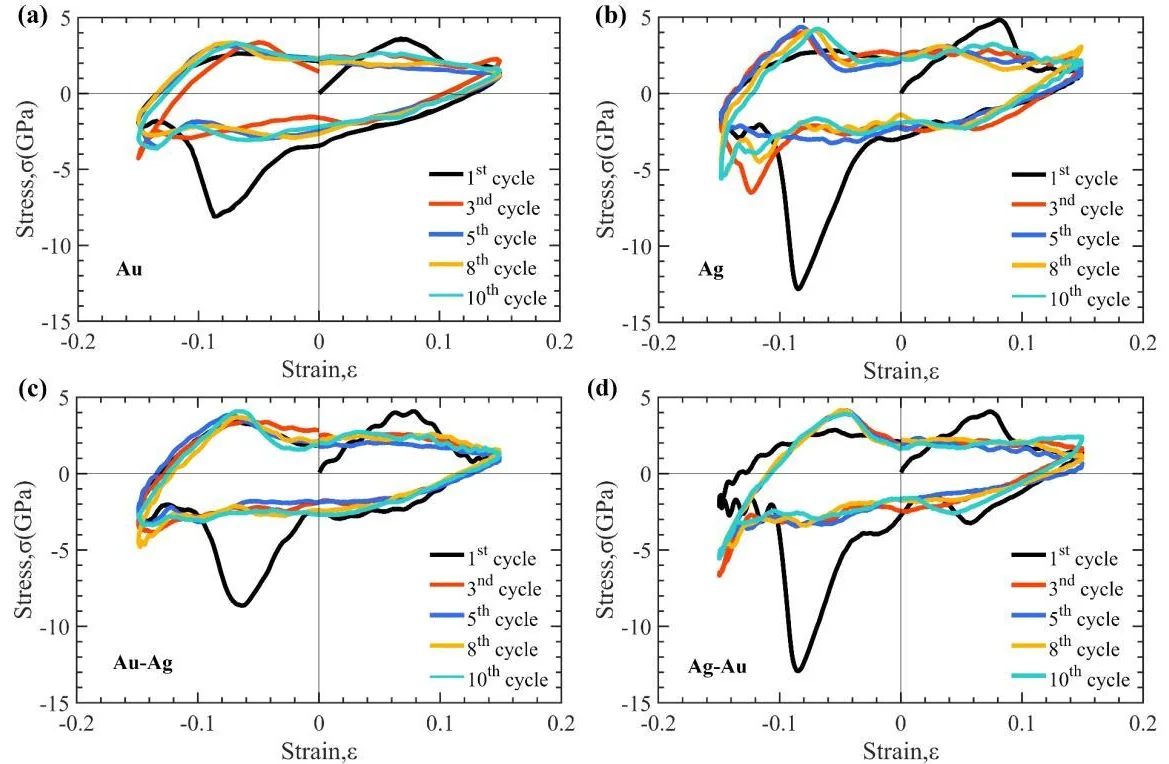
Pure silver carried more tensile stress than pure gold in the first simulated fatigue cycle.
The gold-core, silver-shell wire retained more of its initial tensile strength than the silver-core, gold-shell wire, although the latter showed greater structural reversibility.
What we found
- In the first fatigue cycle, pure silver had the highest tensile strength at 4.12 GPa and pure gold the lowest at 3.07 GPa.
- The silver-core, gold-shell wire reached 4.02 GPa in first-cycle tension.
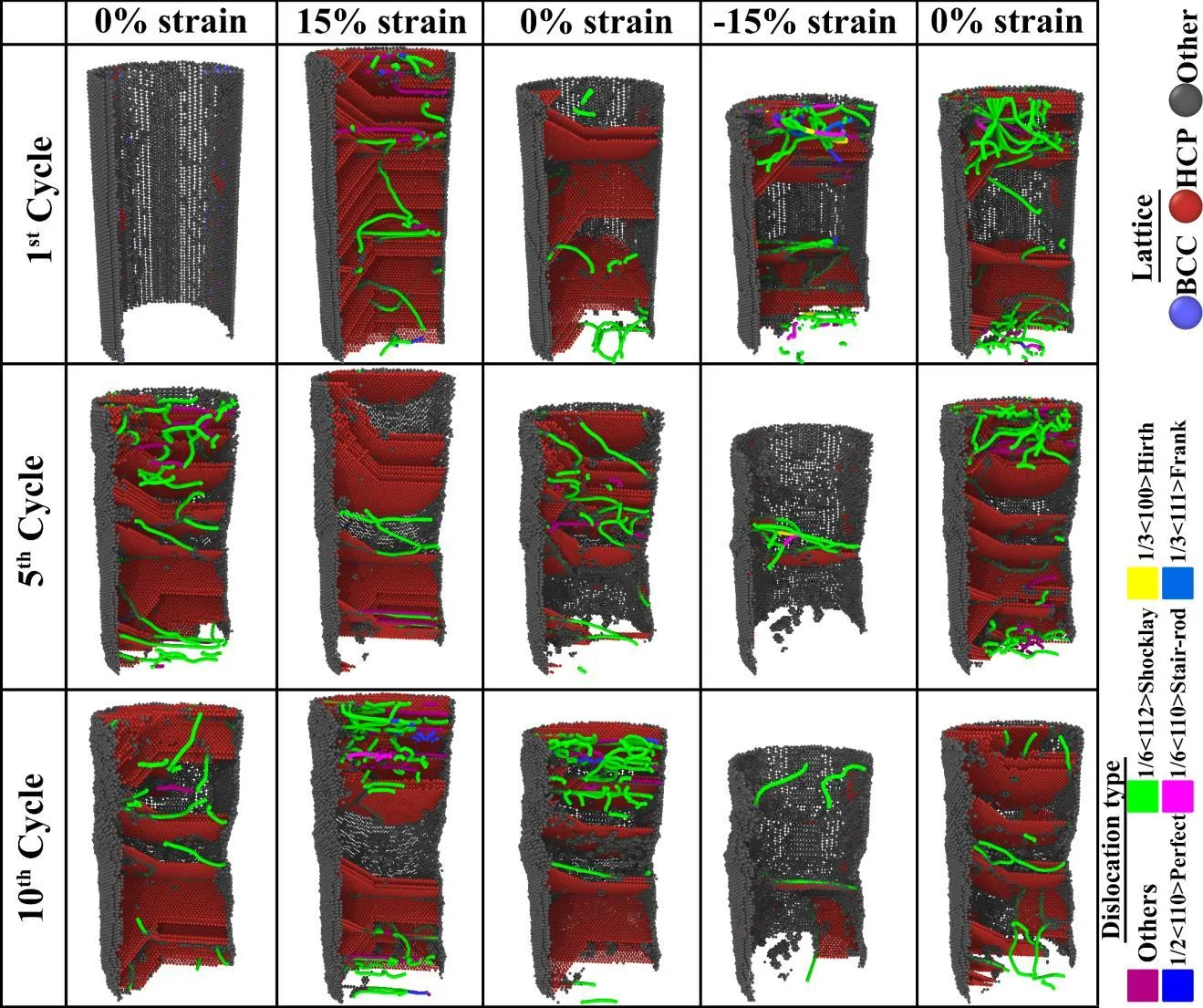
- The silver-core, gold-shell wire showed the greatest reversal of dislocations and stacking faults during cycling.
- First-to-tenth-cycle tensile strength fell by 0.4% for the gold-core, silver-shell wire and by 7.2% for the silver-core, gold-shell wire.
Figures
Why it matters
The comparison helps guide nanowire architecture choices for stretchable conductors.
Recreate it yourself. Tension–compression cycling of Au-core/Ag-shell and Ag-core/Au-shell nanowires with the paper’s MEAM parameters. Draft: some alloy parameters still need checking against the published tables. Open the tutorial →
Next case study · Faster cooling makes lead-free solder weaker but tougher → · Back to Nanoscale mechanics research