The problem
Space mechanisms encounter temperatures beyond the range covered by any single lubricant study. Different coatings and test conditions make individual measurements difficult to compare.
What I did
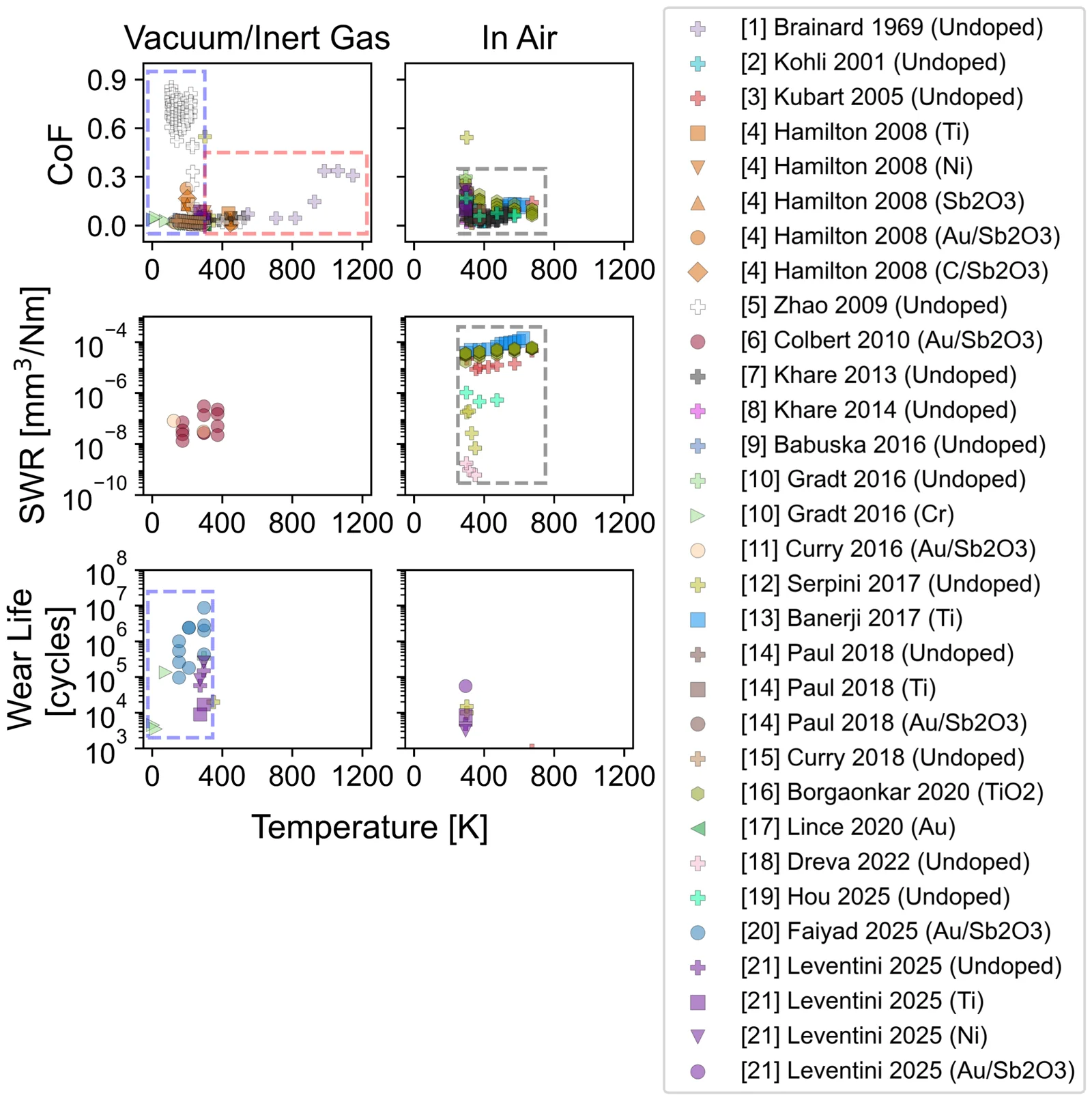
The review compiled published friction, wear, and wear-life data into a plot matrix. The authors compared reported trends, proposed mechanisms, and gaps across studies.
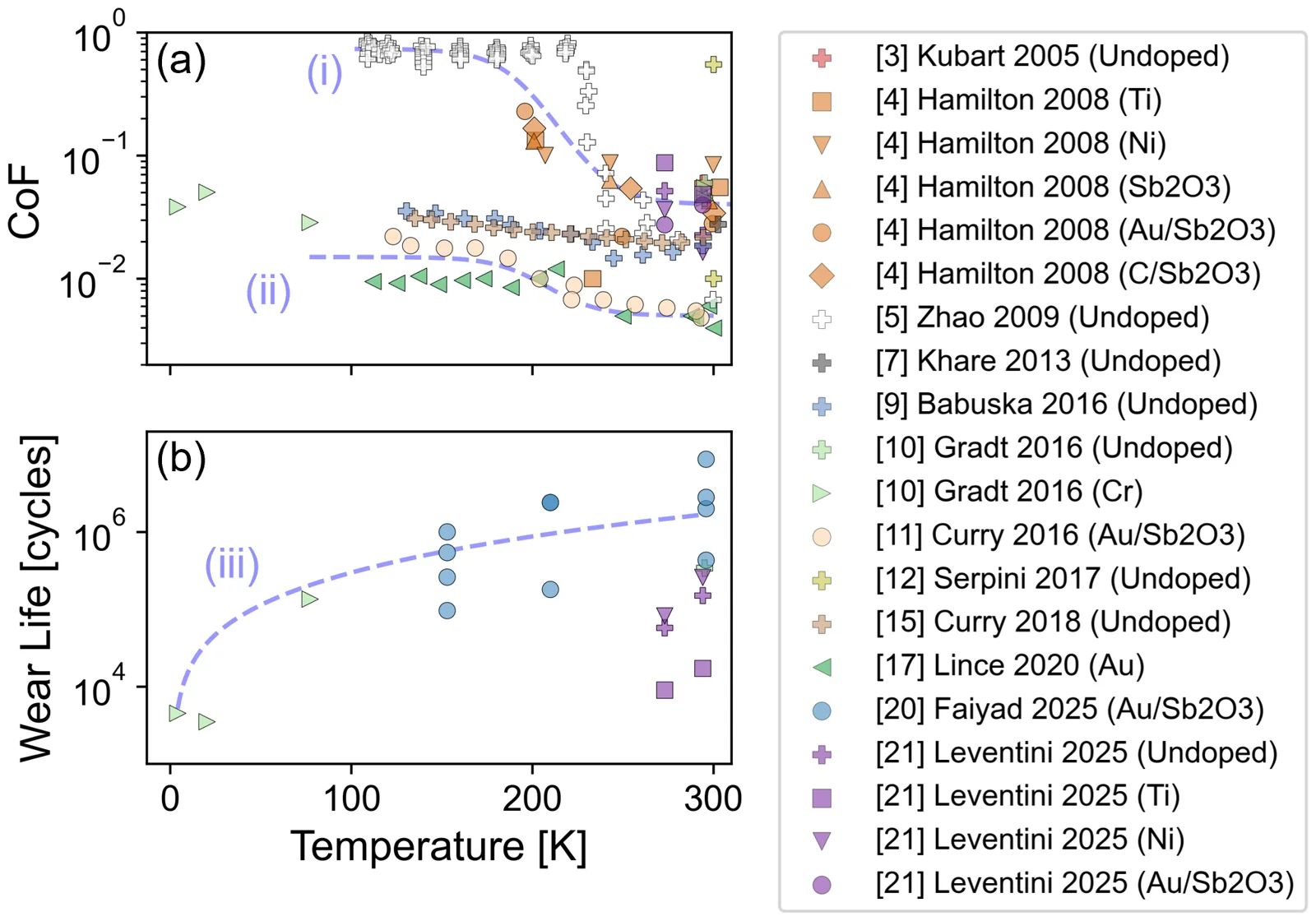
Data from five studies showed a transition toward higher friction around this temperature, indicating poorer sliding performance in the colder regime.
The review found a relatively small temperature effect on lubricant performance in this range, unlike the consistent deterioration below it.
What we found
- In inert gas or vacuum, lubricant performance consistently deteriorated below 220 K and showed relatively little temperature dependence between 220 and 540 K.
- Friction data from five studies showed a transition toward higher friction around 220 K.
- In air above 270 K, studies reported non-monotonic and sometimes opposing trends, associated with competing water desorption and oxidation.
- The review identified gaps in temperature-dependent transfer-film characterization and simulations of doped coatings.
Figures
Why it matters
The review helps spacecraft engineers identify test conditions and evidence gaps when selecting dry-film lubricants.
Recreate it yourself. Turn digitized friction, wear-rate and wear-life data into the review’s metric × environment plot matrix. Open the tutorial →
Next case study · Why classical models get ion adsorption on gold wrong → · Back to MoS₂ lubricants for space research