The problem
Metal 3D printing exposes Inconel-718 to rapid cooling and can leave defects. The effects of cooling and defects on deformation help determine how printed components perform.
What I did
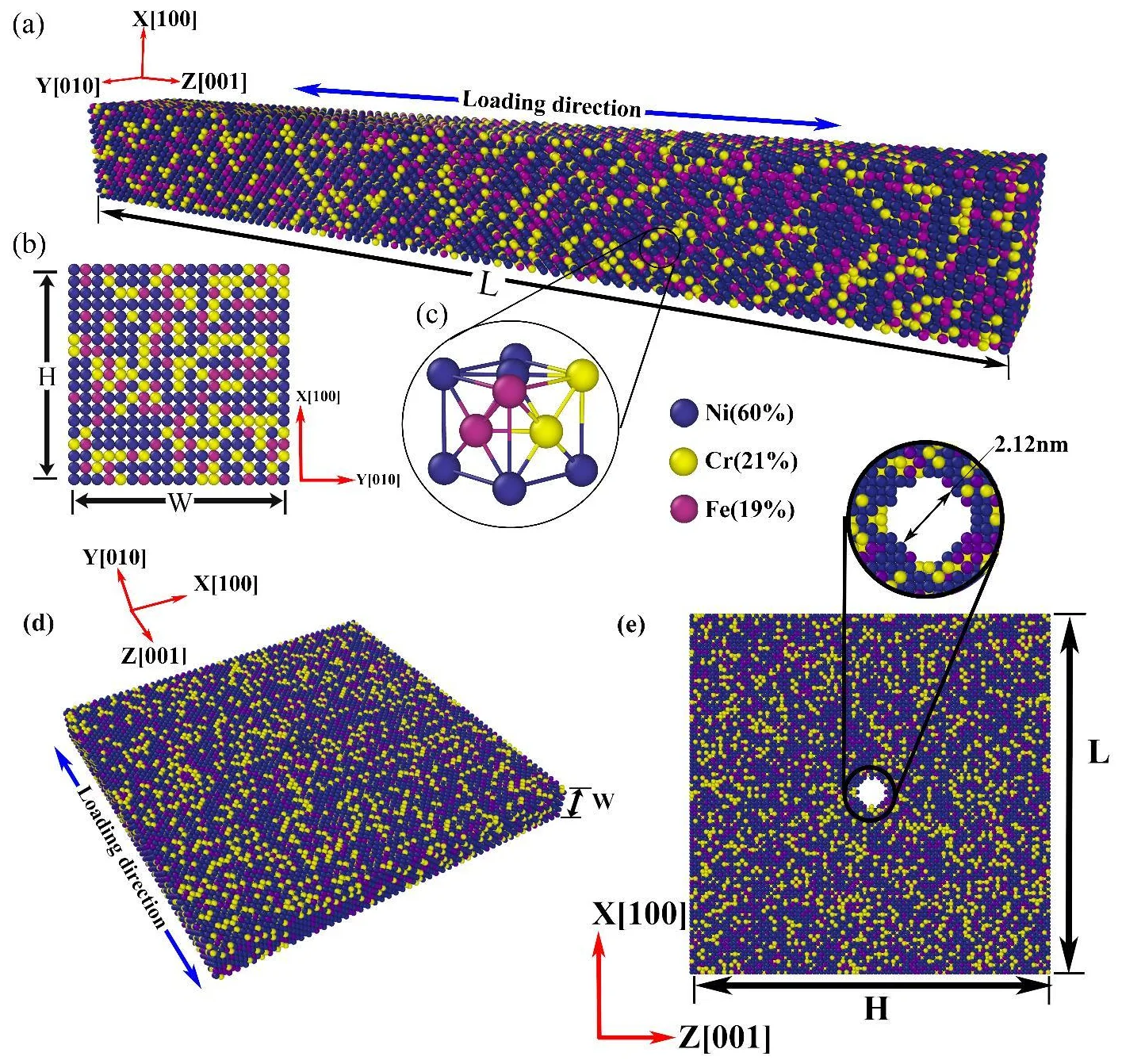
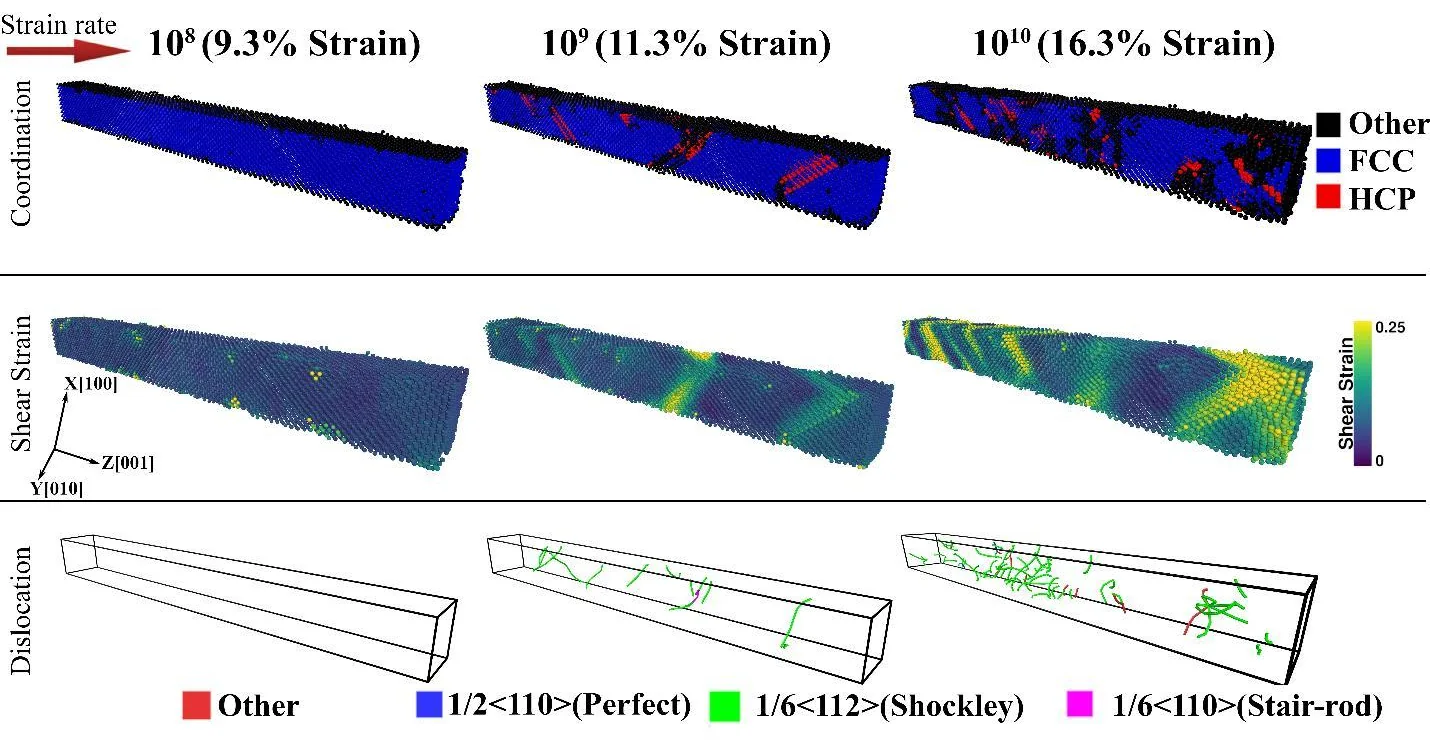
Molecular dynamics simulations used an embedded atom method potential to study nanowires, nanopillars, and nanoplates. The authors varied temperature, loading rate, cooling rate, and the presence of a void.
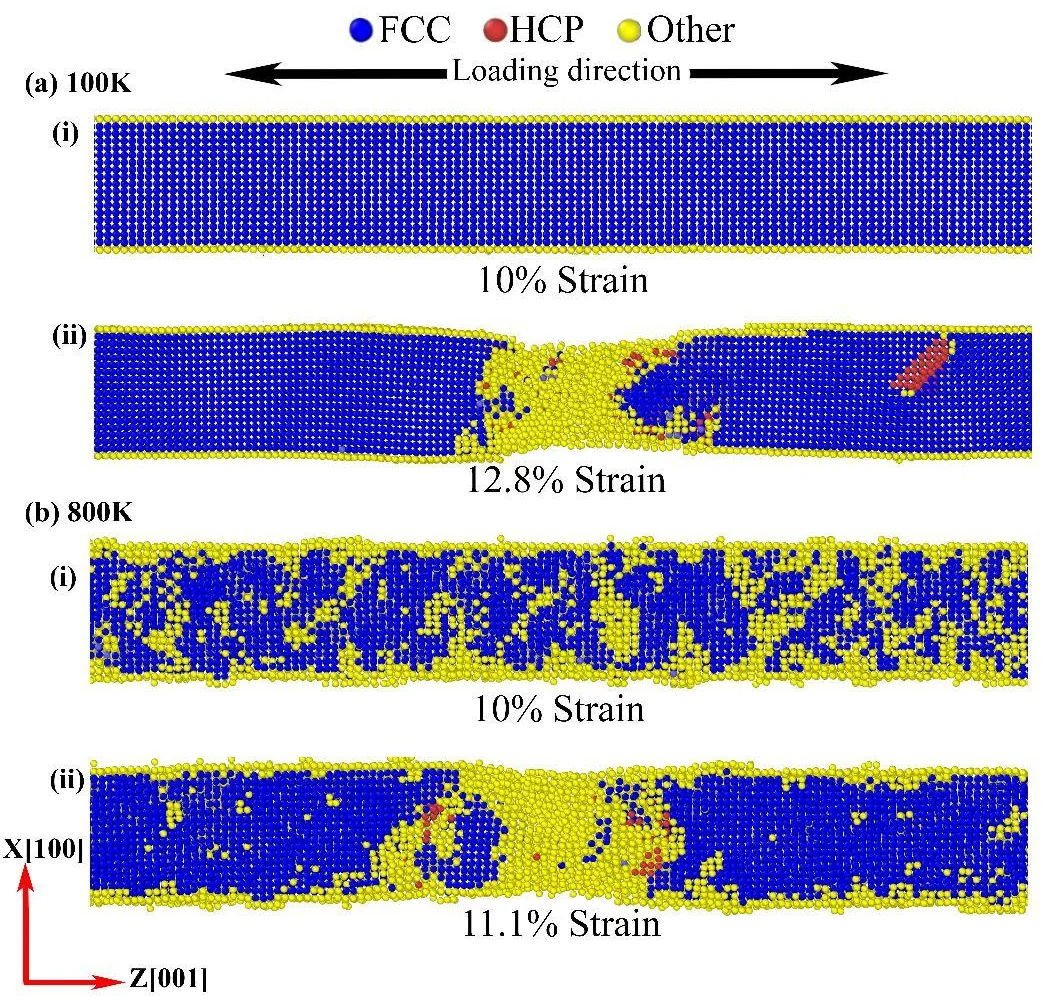
The decrease from 100 K to 800 K shows that the simulated wire carried less tensile stress at higher temperature.
The decrease from 100 K to 800 K shows that the simulated wire became less stiff.
What we found
- Nanowire tensile strength fell from 10.02 GPa at 100 K to 5.54 GPa at 800 K.
- Nanowire Young's modulus fell from 119.68 GPa at 100 K to 56.66 GPa at 800 K.
- Faster cooling increased strength and fracture strain in the simulated nanoplates.
- Solidification eliminated the central void in a cooled model, whose strength approached that of the annealed model without a void.
Figures
Why it matters
The results inform tests of cooling and defect formation in printed Inconel components.
Recreate it yourself. Build a random Ni–Cr–Fe alloy nanowire, stretch it at two temperatures with the Bonny FeNiCr EAM potential, and compare the stress–strain curves. Open the tutorial →
Next case study · Gold–silver core–shell nanowires under repeated stretching → · Back to Nanoscale mechanics research